Office Address
Comapany Address
Phone Number
Email Address
info@ hstnpl.com
Comapany Address
info@ hstnpl.com
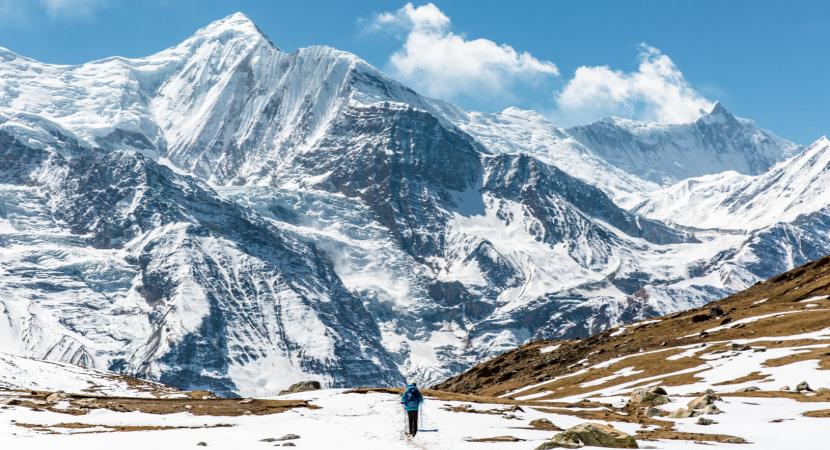
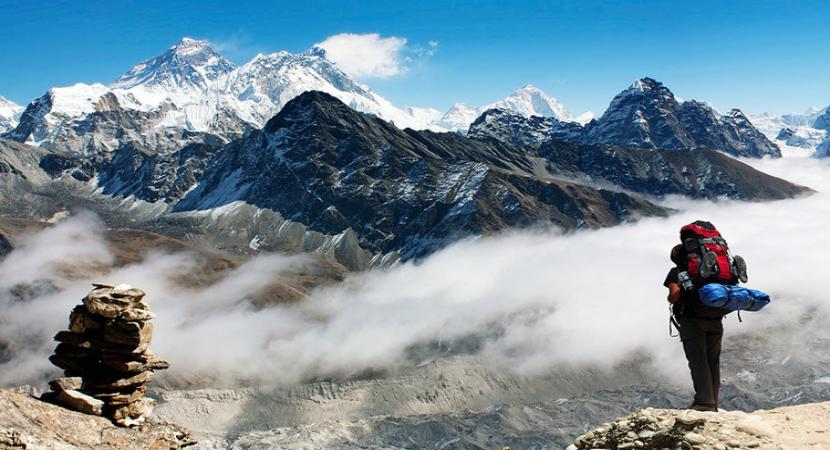
The Annapurna Circuit trek offers a unique combination of diverse ethnic cultures, lifestyles, and landscapes, all set against the backdrop of stunning mountain vistas. It is one of the most iconic and varied trekking routes in Nepal, featuring an array of ethnic groups with their distinct languages and traditions, alongside breathtaking views of some of the highest peaks in the world, including those over 7000 and 8000 meters. The trek takes you through diverse natural environments, from lush, tropical rice fields and moss-covered rhododendron forests to ancient Tibetan fortresses perched on rocky cliffs. Trekking here provides an opportunity to experience the rich cultural tapestry of Hinduism, Buddhism, and the ancient Bon-Po religion, which coexist and blend along the Annapurna Circuit.
For those tackling the Thorung La Pass at over 5400 meters, the route has been specially designed to shorten the trek and avoid newer roads. Starting from Bulbule after a drive from Kathmandu, the trek ends with a mountain flight from Jomsom to Pokhara, keeping the highlights of the classic Annapurna Circuit intact. The trail passes through the Great Himalayan Trail, from Dharapani to Kagbeni, where Tibetan Buddhist culture predominates. You’ll visit the ancient Braga Monastery and the sacred Muktinath Shrine, which is revered by both Hindu and Buddhist pilgrims. Crossing the challenging Thorung La Pass at 5416 meters is a key highlight, offering spectacular views from the pass, stretching from the wind-eroded Mustang Valley—once a forbidden kingdom—to the majestic Annapurna and Dhaulagiri mountain ranges. The people of Mustang share cultural ties with Tibet, and the region was once part of Tibet itself. Mustang is also one of the last places where you can witness the ancient Bonpo Religion in practice, particularly in the villages of Thini and Lupra. The trek concludes with a visit to the serene lakeside city of Pokhara before returning to Kathmandu to wrap up this exhilarating adventure.
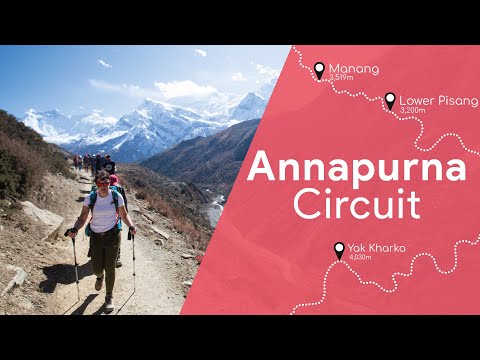
The Annapurna Circuit Trek typically takes 12–18 days, depending on itinerary, acclimatization days, and side trips. The trail circles the Annapurna Massif, passing through diverse landscapes, traditional villages, and high mountain passes.
The trek’s highest point is Thorong La Pass (5,416 m). Proper acclimatization and a gradual ascent are essential to safely cross this challenging yet rewarding pass.
The best seasons are spring (March–May) and autumn (September–November). These months offer clear mountain views, stable weather, and comfortable trekking conditions.
This trek is moderate to challenging. A good level of physical fitness, stamina, and mental preparation is recommended, especially for high-altitude walking days.
Altitude gain is gradual, but altitude sickness can occur. Rest days, proper hydration, and following your guide’s advice are crucial for a safe trek.
Accommodation is mainly in teahouses, offering basic yet comfortable lodging. Meals include local Nepali food and international dishes, with limited options at higher elevations.
Trekkers need the Annapurna Conservation Area Permit (ACAP) and TIMS card, which are arranged by Himalaya Safety Treks and Expedition Pvt. Ltd.
Weather varies greatly from subtropical lowlands to alpine regions. Temperatures can drop below freezing at higher altitudes, especially at night.
The trek passes through Gurung, Thakali, and Manangi villages, offering rich cultural experiences, monasteries, prayer flags, and traditional Himalayan lifestyles.
Our experienced local guides prioritize safety, acclimatization, and responsible trekking, ensuring a secure and memorable journey through the Annapurna region.
We begin our journey into the hills, traveling along winding roads by the Trishuli River. En route, we pass through the countryside of Nepal, offering views of greenery, rivers, villages, farms, and beautiful mountain scenery. After arriving at Mugling, we continue along the road toward Pokhara. At Dumre, we leave the highway to Pokhara and head north to Besisahar. A half-hour drive from Besisahar takes us to Khudi, the starting point of our trek. Alternatively, we can stop at Besisahar and trek for an hour to reach Khudi along a wide trail. Khudi offers the first glimpse of the gorgeous Manaslu range.
Our first day’s walk involves crossing a few suspension bridges, waterfalls, and several uphill and downhill sections through rice paddies and subtropical forest. Initially, the walk is gradual but becomes steeper. The mountains we saw from Khudi now seem closer as we gain elevation. The villages and people are fascinating. On the way to Sirung, we pass through an ethnic Tamang settlement, Taranche. In Sirung, we enjoy close-up views of Nadi Chuli and Manaslu. We will also experience a homestay, where we can enjoy a cultural program organized by the villagers for the visitors. If the group exceeds four people, we may need to split and stay in different houses. At this point, we will have our first close view of the beautiful Manaslu range.
We trek through amphitheater-shaped rice terraces, along steep vertical cliffs, lush forests, and some culturally intriguing villages. Always following the Marsyangdi River, we walk through stunning landscapes, with little waterfalls, forests, and villages. The trek remains relatively easy until we reach Syange (1,100 m), after which the climb gets steeper, leading us to Jagat (1,300 m). From Jagat, we make a steep climb to Chamje. Overnight in Chamje.
Today, we enter the Manang region, passing through fields of corn, barley, and potatoes, and forests of bamboo and rhododendrons. Along the way, we reach the village of Tal, located on a flat plain next to a sandy beach and river at the base of a large waterfall. While hiking, we may occasionally need to give way to a large donkey caravan. Overnight in Dharapani.
Today we navigate a few steep forested ridges and several landslides along the route. However, we will be treated to sensational views of Lamjung Himal, Annapurna II, and Annapurna IV (7,525m/24,688ft). Small hot springs provide relief after a long day of trekking. Overnight in Chame
A steep and narrow path through a dense forest leads us to a dramatic rock face, rising 1,500 meters from the river. The heavy vegetation is now replaced by open terrain. We cross and re-cross the river on suspension bridges. As the trail opens up, we are surrounded by majestic Himalayan peaks and enter the U-shaped valley of Manang, nestled between two giant snow peaks. After enjoying the stunning scenery, we arrive in Pisang. Overnight at Lower Pisang.
Today, we have the option to take one of two routes. The upper route, recommended by Himalayan Glacier, passes through Upper Pisang via Geru, offering outstanding scenery with panoramic views of Annapurna, Pisang Peak, and several other peaks. The landscape and vegetation begin to change, with the cold, dry climate creating a harsher environment. A visit to the Barge Monastery, the largest in the entire Manang district, will be a memorable experience. Overnight in Manang.
Today is the scheduled acclimatization day. Rather than staying idle, we recommend a short walk to a higher altitude to help acclimate. The next two days will involve a challenging and tiring trek with rapid elevation gain, so it is important to take precautions. Bhojo Gompa or Gangapurna Lake are excellent sites to visit for acclimatization. Additionally, we can take an easy excursion to the nearby village of Vraga, where we can visit a monastery. We will also visit the Himalayan Rescue Association to learn about mountain sickness. Overnight in Manang.
From Manang, the trail crosses a stream, climbs to the village of Tenki, and then continues northward up the Jarsang Khola valley. The trail passes through pastures and juniper trees, gradually gaining elevation. Near the village of Ghunsa, the trail moves through meadows where horses and yaks graze. After crossing a small river, we pass an old Mani wall and reach Yak Kharka. A gradual ascent is key to avoiding altitude problems. Overnight at Yak Kharka.
Today, we make our way to Thorong Phedi, a small settlement catering to trekkers and climbers. Some trekkers may choose to hike to High Camp to make the next day's trek easier, but we advise against this. It's better to rest at Thorong Phedi and be well-rested for the challenging day ahead. Overnight at Thorong Phedi.
Today, we reach the climax of our Annapurna Circuit trek by crossing the famous Thorong La Pass (5,416m/17,764ft). An early start is crucial to completing the pass. The trail is icy and challenging, but the breathtaking views of the high Himalayas will keep us motivated. Upon reaching Muktinath, an important pilgrimage site for both Hindus and Buddhists, we will visit the Vishnu Temple and nearby monastery. Muktinath symbolizes religious harmony in Nepal. Overnight at Muktinath.
In the morning, we visit the Vishnu Temple and Gompa at Muktinath. We descend through the barren hillside, passing Ranipauwa village, and continue on to Kagbeni and Jomsom before arriving at Marpha. The landscape today is surreal as we trek above the Kali Gandaki River, the world's deepest gorge. Marpha is famous for its apples, and the local apple brandy is well-known throughout Nepal. Overnight in Marpha.
To avoid newly constructed roads, we take an alternative route to Tatopani. The journey is mostly downhill. We cross the bridge at Ghasa and descend through subtropical forests and lush vegetation. We pass by Rupse Chahara (a popular waterfall) and continue to Narchyang Besi, where we will see the local powerhouse. Upon reaching Tatopani, we can relax and enjoy a bath in the hot spring.
To avoid newly constructed roads, we take an alternative route to Tatopani. The journey is mostly downhill. We cross the bridge at Ghasa and descend through subtropical forests and lush vegetation. We pass by Rupse Chahara (a popular waterfall) and continue to Narchyang Besi, where we will see the local powerhouse. Upon reaching Tatopani, we can relax and enjoy a bath in the hot spring.
We observe the lifestyle of people in midland villages as we gradually ascend to Ghorepani, passing terraced farmlands. We traverse through rhododendron, birch, and magnolia forests and meadows. As we gain elevation, the views of the peaks become more magnificent. We will stay at Ghorepani to make the early climb to Poon Hill the next morning. Overnight in Ghorepani.
At dawn, we ascend to Poon Hill (3,210m/10,531ft) to witness the spectacular sunrise over the Annapurna and Dhaulagiri massifs and surrounding rice terraces. Poon Hill is a photographer's paradise. After breakfast, we continue along the trail to Tadapani, passing through rhododendron forests. The scenery remains stunning throughout the day. Overnight in Tadapani.
The trail leads down through rhododendron forests to Ghandruk, the second-largest Gurung settlement in Nepal. After lunch, we trek to Nayapul and take a short bus ride back to Pokhara, a peaceful lakeside city with a tropical climate and dramatic Himalayan backdrop. Overnight in Pokhara.
At dawn, we ascend to Poon Hill (3,210m/10,531ft) to witness the spectacular sunrise over the Annapurna and Dhaulagiri massifs and surrounding rice terraces. Poon Hill is a photographer's paradise. After breakfast, we continue along the trail to Tadapani, passing through rhododendron forests. The scenery remains stunning throughout the day. Overnight in Tadapani.
The trail leads down through rhododendron forests to Ghandruk, the second-largest Gurung settlement in Nepal. After lunch, we trek to Nayapul and take a short bus ride back to Pokhara, a peaceful lakeside city with a tropical climate and dramatic Himalayan backdrop. Overnight in Pokhara.
Based On 0 Review
Your email address will not be published



"I did the 10 days ABC trek with Batti, a very good guide. The trek was amazing! First, I met the owner who gave me lots of information and advices for the trek. This agency is very..."

"처음부터 끝까지 완전 퍼펙트 했습니다 ^^ 부펜 사장님과 미팅을 시작으로 3박 4일 동거동락을 함께했던 가이드와 포터 까지 친절하고 섬세한 보살핌 덕분에 뷰 포인트에서 장엄한 일출까지 보..."

"I cannot praise Himalaya Safety enough for organizing my unforgettable Panchase trek in Nepal! Bhupi’s expertise in advising me on the perfect trek for my preferences was invaluabl..."

"I’ve just returned from a 9 day Annapurna base camp trek. The trek was very well planned out. Pre trek itinerary and information was excellent. The guides, Madhav, Santosh and Kim..."

"I booked a day rock climbing and Mardi Himal trek through Himalaya safety adventure. I had a fantastic day climbing with Bhoopi. He was patient, kind and a brilliant climbing partn..."

"We had an amazing rock climbing session with Bhoopie in Pokhara – truly an unforgettable experience! Bhoopie’s expertise and calm guidance made us feel safe and confident throughou..."

"마르디히말 트래킹과 패러글라이딩, 비행기를 여기서 예약했어요. 가이드와 포터 모두 친절했어요. 특히 가이드는 한국말을 잘했고, 저랑 엄마가 계단을 힘들어했는데 최대한 계단 없는 길로 가..."

"Amazing trek experience! Kind and helpful owner, friendly and professional guide, and top-notch safety standards. Couldn’t have chosen better – highly recommend!"

"We recently went on a Lower Mustang trip, and it was truly a remarkable adventure, thanks to the Himalaya Safety Treks and Expedition that organised everything for us. From the mom..."

"I cannot thank Himalayan Safety and specifically Bhupendra enough for facilitating the experience of a lifetime. I came to him with a specified set of requirements, and still thoro..."

"Had the pleasure of meeting Bhupendra from Himalaya Safety Treks & Expedition whilst staying in Pokhara. After a long and insightful conversation we decided to climb Mardi Himal v..."

"I cannot praise Himalaya Safety enough for organizing my unforgettable Panchase trek in Nepal! Bhupi's expertise in advising me on the perfect trek for my preferences was invaluabl..."