Office Address
Comapany Address
Phone Number
Email Address
info@ hstnpl.com
Comapany Address
info@ hstnpl.com
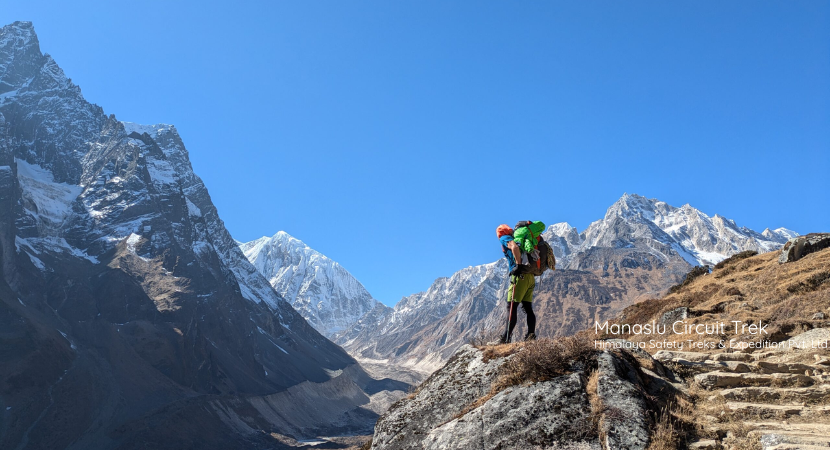
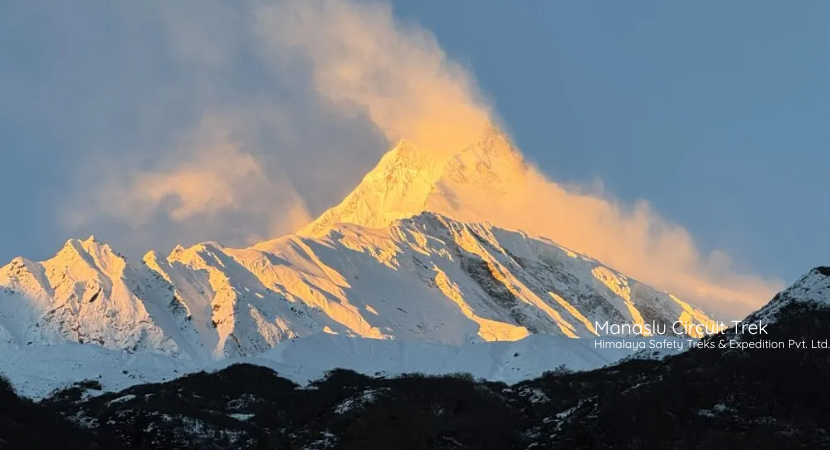
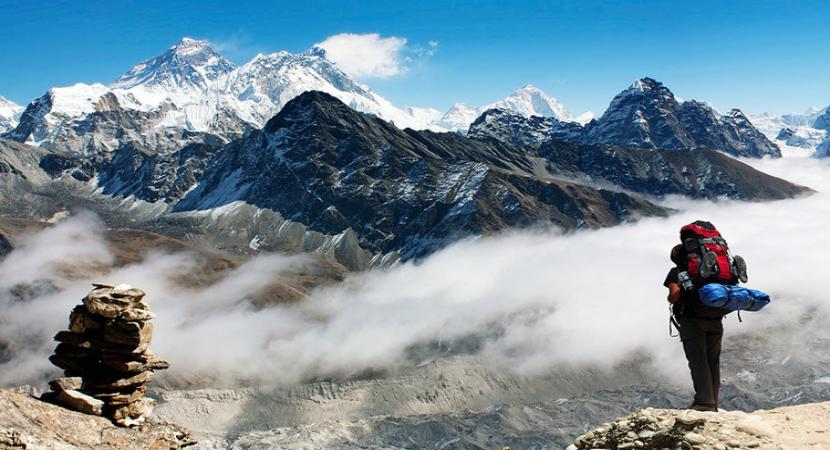
The Manaslu Circuit Trek is one of Nepal’s most spectacular and less crowded trekking adventures. Located in the remote Himalayan region, this trek circles Mount Manaslu (8,163 meters) — the eighth highest mountain in the world. The route offers breathtaking mountain views, dramatic landscapes, and an authentic cultural experience that makes it a perfect alternative to the busy Annapurna Circuit.
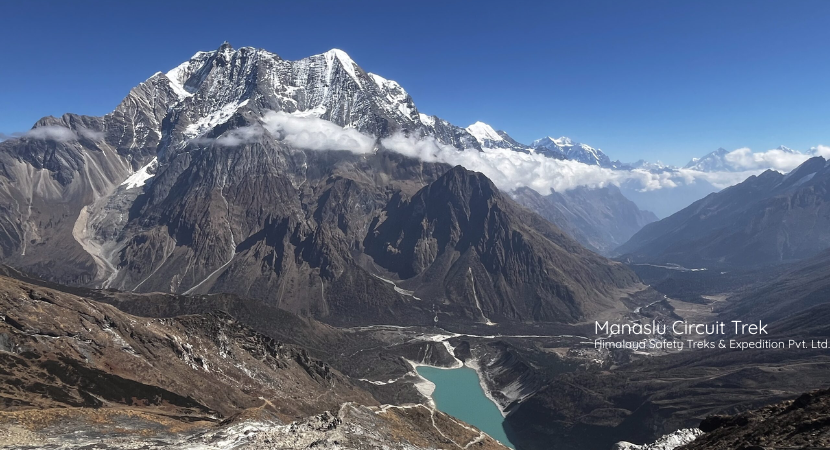
The journey follows the beautiful Budhi Gandaki River valley, starting from lower subtropical forests and gradually climbing into alpine terrain and high mountain landscapes. Trekkers walk through terraced fields, dense forests, deep gorges, suspension bridges, and traditional villages surrounded by towering Himalayan peaks.
One of the most rewarding parts of the trek is experiencing the unique blend of Hindu and Tibetan Buddhist cultures. As you travel deeper into the Manaslu region, you will encounter ancient monasteries, prayer wheels, mani walls, and traditional Tibetan-style villages where locals still practice centuries-old traditions.
The biggest highlight of the trek is crossing the Larkya La Pass (5,125 meters). This challenging but rewarding pass offers panoramic views of the surrounding Himalayan giants including Himlung Himal, Cheo Himal, Kang Guru, and Annapurna II. After crossing the pass, the trail descends into the beautiful Bimtang valley before connecting with the Annapurna region near Dharapani.
The Manaslu Circuit Trek is perfect for adventurers looking for untouched nature, rich cultural encounters, and a challenging Himalayan trekking experience. With fewer crowds compared to other popular trekking routes, it offers a peaceful and authentic journey through one of Nepal’s most beautiful mountain regions.
Restricted Area Permit
The Manaslu region is a restricted trekking area, meaning trekkers must obtain a special permit and must travel with a licensed trekking agency and guide. This rule helps preserve the natural environment and local culture of the region.
Best Time to Trek
The best seasons for the Manaslu Circuit Trek are spring (March to May) and autumn (September to November). During these months, the weather is stable, skies are clear, and the mountain views are spectacular. Winter treks are possible but Larkya Pass can be heavily snow-covered.
Trek Difficulty Level
Manaslu Circuit is considered a moderately challenging to difficult trek due to its high altitude and long trekking days. Proper acclimatization, good physical fitness, and preparation are important to complete the trek safely.
Accommodation and Food
The route offers teahouse accommodation, where trekkers stay in simple mountain lodges run by local families. Meals typically include Nepali Dal Bhat, noodles, soups, Tibetan bread, and local dishes that provide energy for trekking.
Cultural Experience
The Manaslu region is heavily influenced by Tibetan Buddhist culture. Along the trail you will see ancient monasteries, prayer flags, chortens, and mani stones. Respecting local traditions and customs is an important part of the trekking experience.
Optional Side Trip – Tsum Valley
Many trekkers combine the Manaslu Circuit with a visit to Tsum Valley, a hidden Himalayan valley known for its ancient monasteries, sacred caves, and preserved Tibetan culture. This side trek offers a deeper cultural experience and stunning mountain scenery.
We set off early today for Sotikhola. During the drive, we enjoy views of the Nepalese countryside along with the mountain sceneries. We will be driving on a paved road from Kathmandu to Dhading Bensi, district headquarter of Dhading (1050m)but the drive from Dhanding Bensi to Arughat will be on a rough road. Upon reaching Arughat, a major town in the region we drive further towards Sotikhola. Overnight in Soti Khola.
At the crossing of the bridge, we trek through the beautiful Sal forests, then climb onto a ridge above huge rapids on the Budhi Gandaki. We then reach Khursane upon which the rocky trail weaves its way up and down, past two tropical waterfalls on a steep, rocky trail clinging to the side of a cliff. It eventually makes its way down and past a few rice terraces, then up and around to the Gurung village of Labubesi. We further climb behind a rocky outcrop, where the valley opens up and the Budhi Gandaki meanders among wide gravel bars. Dropping to the sandy river bed, we walk along rounded stones before climbing over a side ridge. We head down again to the river and cross another suspension bridge to reach Machha Khola village. Overnight in Machha Khola.
The narrow trail makes some minor ups and downs and eventually crosses the Tharo Khola and reaching Khorlabesi. After a few more ascends and descends we come across a small Hotspring in Tatopani. From the hot spring, we climb over another ridge, then cross the Budhi Gandaki on a suspension bridge. At this juncture, we climb on a wide, well-crafted staircase, then across a landslide and over a ridge to Dobhan. Upon crossing a suspension bridge over the Yaru Khola, we climb the stone stairs and then drop to the river and again climb more stone stairs to Tharo Bharyang. Crossing the west bank of the Budhi Gandaki, we climb over a ridge, trek along the river and then climb towards the village of Jagat. Overnight in Jagat.
We begin today’s trek by climbing over a rocky ridge to Salleri, and then descend to Sirdibas. The valley widens a bit as the trail continues up to Ghatta Khola. We further continue walking upstream to a long suspension bridge in Philim, a large Gurung village. The trail turns north just above the lowest house in the village and stays on a fairly level trail as it crosses millet fields to Ekle Bhatti. The route now enters a steep, uninhabited gorge. At this point, we descend to the grassy land slopes, cross the Budhi Gandaki, then trek along the west bank for a while, then cross to the east bank and then back again. As we continue through the trail the valley widens and we pass through bamboo forests to the Deng Khola. Upon crossing the Khola, we reach the tiny village of Deng. Overnight in Deng.
After a brief walk beyond Deng, we cross the Budhi Gandaki and climb to Rana at 1910m. From the bridge, we climb a bit to join a trail from Bhi, then head west up the Budhi Gandaki valley. The trail also passes through forests and mani where we turn towards a corner that contours to Ghap. Even though there is another route, we take the route through Prok village. Prok village has a viewpoint for a beautiful sight of Siringi Himal. We further cross the Budi Gandaki several times today and come across several gompas en route. The trail follows the river upstream through a dense forest. After crossing the river at an impressive spot where it thunders down a narrow gorge, the forest becomes less dense and the trail is fine again. The pleasant walk continues and after a last steep climb we reach Namrung. Overnight in Namrung.
Namrung village is a good viewpoint for Siring and Ganesh Himal and from the village one can also see Mt. Himal Chuli in the south. We climb steadily and pass through forests and reach Lihi, a fine village with many chortens and barley terraces. The trail drops and crosses the side valley of Simnang Himal with Ganesh Himal always close by. We further pass through Sho, Lho and Shyala villages before reaching Sama Village. We enjoy extraordianary views of Mt. Manasly from Lho village and also explore the famous Ribung Gompa. In Shyala village we will be surrounded by high mountains like Himal Chuli and Peak 29 (Ngadi Chuli) to the left, Manaslu and large glaciers straight ahead, and other snow summits to the right, and at the far end stands Ganesh Himal. Today’s journey ends in Samagaon where we spend the night.
We spend the day at Samagaon both for rest and acclimatization. Today, we get acquainted with the rich Sherpa culture. We enjoy the sight of thousands of mani stones with Buddhist texts and pictures and the Sherpa women clad in traditional clothes and ornaments. On a little hill near the Sama village is an old Gompa (Pungyen Gompa), a monastery with great views of the glacier. It is named after Manaslu, Pungyen means bracelet, a good description of the two peaks. It was destroyed a year after the first unsuccessful Japanese attempt to climb Manaslu. The locals believed that the climb angered the gods, and when the Japanese came back a year later they met with a lot of resistance that they had to give up their attempt. They were finally successful in 1959. Overnight in Samagaon.
Today, we descend to the Budhi Gandaki River, that has turned north and follow it to a bridge over a side stream. The trail to the left leads to the Manaslu Base camp. The Larkya la Trail passes several mani walls as the valley begins to widen. It is an easy trail on a shelf above the river passing the juniper and birch forests of Kermo Kharka. We drop off the shelf, cross the Budhi Gandaki on a wooden bridge and climb steeply onto a promontory between two forks of the river. From a stone arch we can view a large white kani. Finally passing through the kani we find Samdo. Overnight in Samdo.
This is another day set aside for proper acclimatization. There are two options for us today. The option that we highly recommend is a hike, up the valley directly at the back of the Samdo village. This hike will take us to one of the trade passes to Tibet for excellent views of Mt. Manaslu along with other Himalayan ranges including Simrang, Hiunchuli, Ngadi, Larkye Peak, Cheo and possibly Kang Guru behind the pass. En route to these viewpoints we pass many seasonal herding settlements called doksas and sight some beautiful mountain birds like the Lophophorus (the national bird of Nepal), Lammergeyer and Himalayan Griffin soaring high above us. Another option for today could be a trip to the Gya La (‘large pass’) to the north of Samdo, a more frequently used trading route to Tibet. But, this is a rather longer hike (whole day) and hence could be a little tiring. Overnight in Samdo.
Even today, we continue our walk down the edge, cross the wooden bridge over Budi Gandaki and begin walking upward. Upon crossing two streams and witnessing the Larkya Glacier we go around the valley of the Salka Khola and climb up again to the stone guest house (4450 m), which is not a lodge but a kind of shelter called Dharmshala, also known as Larke Phedi. The short walk today also leaves plenty of time for acclimatization and relaxing in the afternoon. Overnight in Dharmashala.
After a short climb, we reach a valley on the north side of the Larkya Glaciers from where we can enjoy great views of Cho Danda and Larkya Peak. Finally, we walk across moraines of the glacier, making a gradual ascent which becomes steeper only in the last section of the pass. From the pass, there are outstanding views of Himlung Himal, Cheo Himal, Kangguru and the huge Annapurna II. It is a longer day than usual to Bimtang, but to walk into these low pastures with the evening mist coming in with Mt. Manaslu looming close by is an overwhelming experience. Overnight in Bimthang
From a ridge at Bimthang, we can enjoy great views of Mt. Manaslu, Lamjung Himal, Himlung Himal and Cheo Himal. We descend further and cross a high pasture (Sangure Kharka) followed by a bridge over Dudh Khola. We walk through rhododendron forest and follow a trail through a narrow valley until we reach the highest cultivated land of the valley at Karche, 2785 meters. We pass across fields before making a steep climb over a ridge. The trail comes off the ridge in a big, sweeping arc to the river bank at 2580m. A short distance beyond is the village of Gho. Due to yesterday’s tiredness we might take an overnight rest at Gho but better lodges are available at Tilije, so Himalayan Glacier recommends we stay at Tilije. Overnight in Tilije Village.
We climb over a small ridge and enjoy the stone paved trail as it passes through a beautiful village. We then cross the bridge over Dudh Khola and climb up through a chorten-shaped arch, pass a mani wall and reach the Thonje village. At the village, we go through a police checkpoint and continue to Dharapani. We have entered the Annapurna circuit section from Dharapani. Further down, we come across Karte village and after quite a bit of walking we cross a bridge over Marshyangdi Khola. We also come across some mani walls before reaching the village of Tal, situated at the foot of a large waterfall. Overnight in Tal.
Drive from Tal ( Local Bus / Jeep transport ) to Besisahar and another transfer to Kathmandu
The drive from Tal to Kathmandu via Besi Sahar offers one an opportunity to enjoy both hill and mountain landscapes. The drive is often along the banks of the Marsyangdi and Trishuli rivers. We also drive by some beautiful villages with farming terraces on both sides of the road. In Kathmandu, we will be escorted to our hotel. The day in Kathmandu can either be spent in leisure or perhaps we catch up with some last minute shopping. To celebrate the successful completion of our journey, we will have a farewell dinner in the evening.Overnight in Kathmandu.
Based On 0 Review
Your email address will not be published
We offer Everest Base Camp, Annapurna Base Camp, Langtang, and custom treks suitable for all skill levels.
Yes, all treks include experienced guides, and porters are available on request for extra support.
Absolutely! Treks, safaris, boating trips, and peak climbing expeditions can be tailored to your preferences.
Book via our website, email, or Pokhara office. We’ll confirm availability and payment instructions promptly.
Packages include accommodation, meals, guide and porter services, permits, local transport, and itinerary-based activities
Essentials include trekking shoes, warm clothing, backpack, water bottle, sunscreen, hat, and basic medical supplies.
es! Safaris in Chitwan and Bardia National Parks are family-friendly, with experienced guides and safe wildlife observation.
You may see tigers, rhinos, elephants, crocodiles, deer, and various birds. Guides ensure safe and responsible viewing.
Strongly recommended for trekking, climbing, and adventure activities to ensure safety and emergency coverage.
Transportation from your hotel or nearby hub to the trek starting point is included in all packages.
Yes! Beginners are welcome with proper guidance, acclimatization schedules, and experienced support staff.
We recommend booking at least 1–2 months before peak trekking seasons (Spring: Mar–May, Autumn: Sep–Nov)
Yes, we provide discounts for families, groups, or corporate bookings. Contact us for a custom quote.



"I did the 10 days ABC trek with Batti, a very good guide. The trek was amazing! First, I met the owner who gave me lots of information and advices for the trek. This agency is very..."

"처음부터 끝까지 완전 퍼펙트 했습니다 ^^ 부펜 사장님과 미팅을 시작으로 3박 4일 동거동락을 함께했던 가이드와 포터 까지 친절하고 섬세한 보살핌 덕분에 뷰 포인트에서 장엄한 일출까지 보..."

"I cannot praise Himalaya Safety enough for organizing my unforgettable Panchase trek in Nepal! Bhupi’s expertise in advising me on the perfect trek for my preferences was invaluabl..."

"I’ve just returned from a 9 day Annapurna base camp trek. The trek was very well planned out. Pre trek itinerary and information was excellent. The guides, Madhav, Santosh and Kim..."

"I booked a day rock climbing and Mardi Himal trek through Himalaya safety adventure. I had a fantastic day climbing with Bhoopi. He was patient, kind and a brilliant climbing partn..."

"We had an amazing rock climbing session with Bhoopie in Pokhara – truly an unforgettable experience! Bhoopie’s expertise and calm guidance made us feel safe and confident throughou..."

"마르디히말 트래킹과 패러글라이딩, 비행기를 여기서 예약했어요. 가이드와 포터 모두 친절했어요. 특히 가이드는 한국말을 잘했고, 저랑 엄마가 계단을 힘들어했는데 최대한 계단 없는 길로 가..."

"Amazing trek experience! Kind and helpful owner, friendly and professional guide, and top-notch safety standards. Couldn’t have chosen better – highly recommend!"

"We recently went on a Lower Mustang trip, and it was truly a remarkable adventure, thanks to the Himalaya Safety Treks and Expedition that organised everything for us. From the mom..."

"I cannot thank Himalayan Safety and specifically Bhupendra enough for facilitating the experience of a lifetime. I came to him with a specified set of requirements, and still thoro..."

"Had the pleasure of meeting Bhupendra from Himalaya Safety Treks & Expedition whilst staying in Pokhara. After a long and insightful conversation we decided to climb Mardi Himal v..."

"I cannot praise Himalaya Safety enough for organizing my unforgettable Panchase trek in Nepal! Bhupi's expertise in advising me on the perfect trek for my preferences was invaluabl..."